
By A. Bimal Hegde, Managing Director, Chartered Housing
Buying a plot is more than buying a piece of land. You are also choosing the layout around it: the roads, infrastructure, open spaces, and how the community is planned to function.
In a growing corridor like Nelamangala, where new plotted developments are taking shape alongside an industrial belt, housing and connectivity, these details become an important part of what you are buying into.
A landscaped entrance or a long list of amenities may look impressive in a brochure, but they tell you little about what lies underneath. What has actually been approved? How has the land been organised? How well are the infrastructure and open spaces planned? And does the finished development match what was promised?
RERA gives buyers a useful starting point: information they can examine rather than relying entirely on the brochure. But registration alone does not tell you whether a layout is well planned, well executed or genuinely premium. For that, you have to look beyond the registration number.
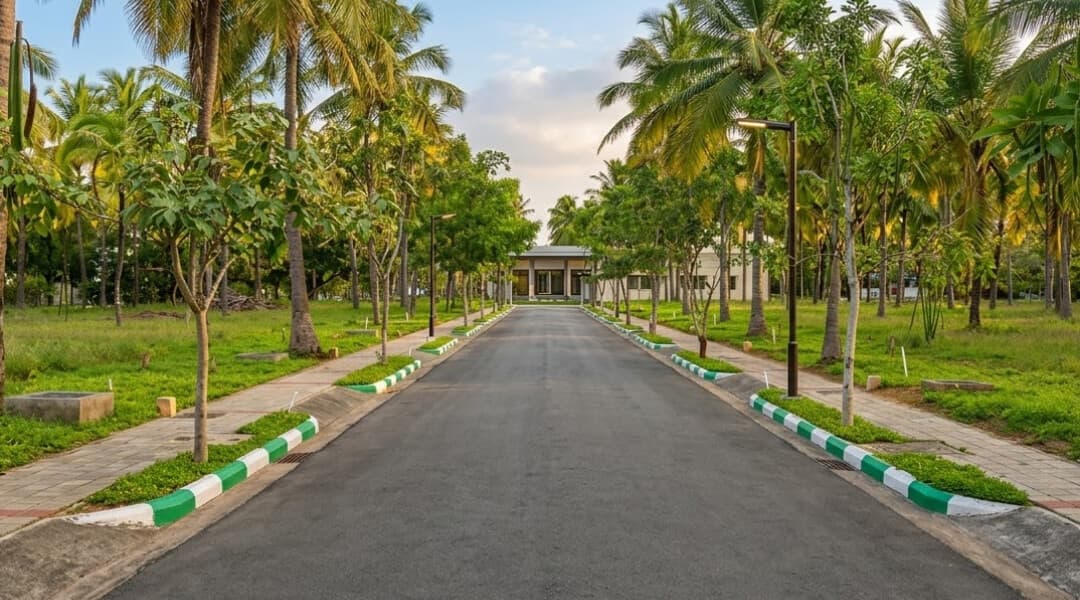
RERA Gives You a Starting Point
The Real Estate (Regulation and Development) Act, 2016 includes the development of land into plots for sale within its definition of a real estate project, subject to the Act’s applicability and exemptions. Where RERA registration applies, promoters must provide project information and develop the project in accordance with sanctioned plans, layout plans, and approved specifications.[1]
RERA registration is a regulatory requirement, rather than a certification of premium quality.
A Premium Layout Starts With How the Land is Organised
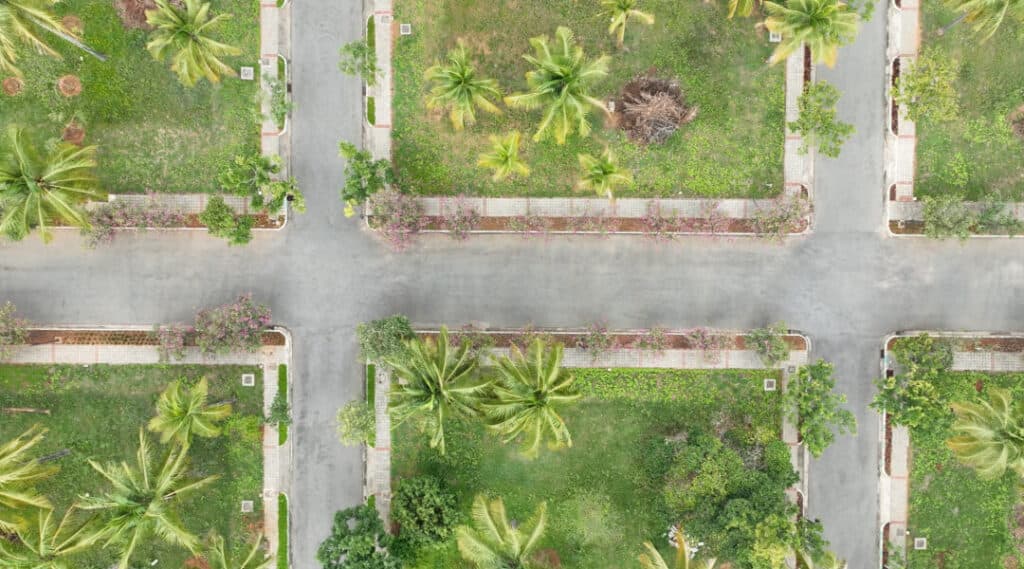
RERA tells you what to verify. The next question is what you are actually verifying.
A plotted development is, first, a plan for organising land. Individual plots have to fit into a larger system of roads, access, open spaces, utilities and common areas. How well that arrangement works can matter more to everyday use than the number of amenities listed in a brochure.
This is especially relevant when comparing a RERA-approved plotted development near Nelamangala with other projects in the corridor.
Look at where the internal roads, open spaces and utilities sit in relation to the plots, and how the layout responds to the site’s existing conditions.
Here, “premium” should describe how well the different parts of the layout work together, rather than simply how many features it contains.
Infrastructure Is Part of the Premium
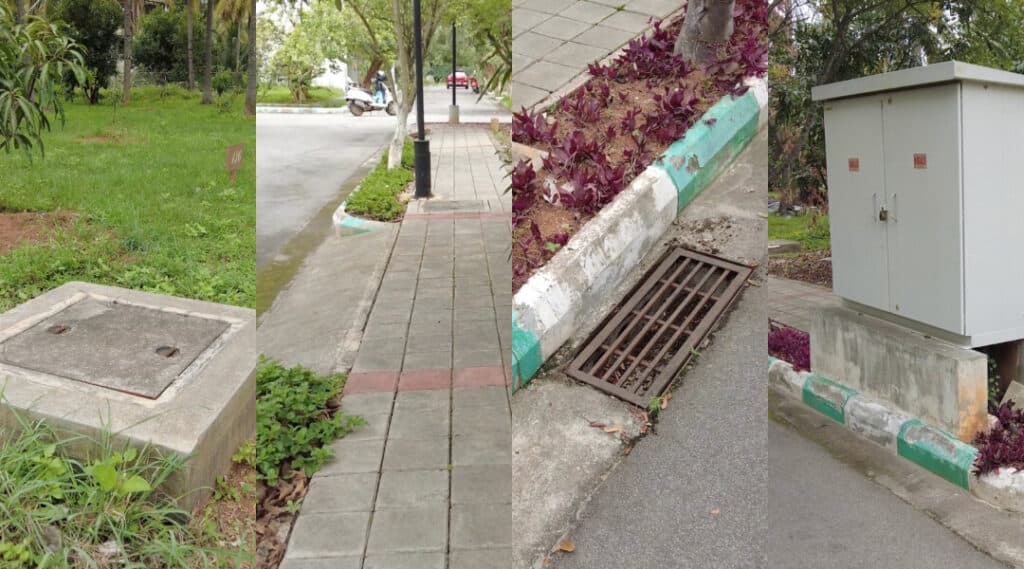
Some of the most important parts of a plotted development are also the least visible in a brochure.
Internal roads need to provide practical access to individual plots. Stormwater drainage needs to account for rainfall, site levels and road gradients. Water and electrical infrastructure need to reach the plots. Sewage arrangements need to be properly planned where applicable. Footpaths, where provided, should work with the road network and surrounding spaces.
Premium infrastructure is not necessarily more infrastructure. It is infrastructure planned properly for the development it has to serve.
If you are considering gated community plots for construction near Nelamangala Road, Bangalore, ask specific questions about the infrastructure rather than simply counting amenities.
Greenery Should Be Considered as Part of the Layout
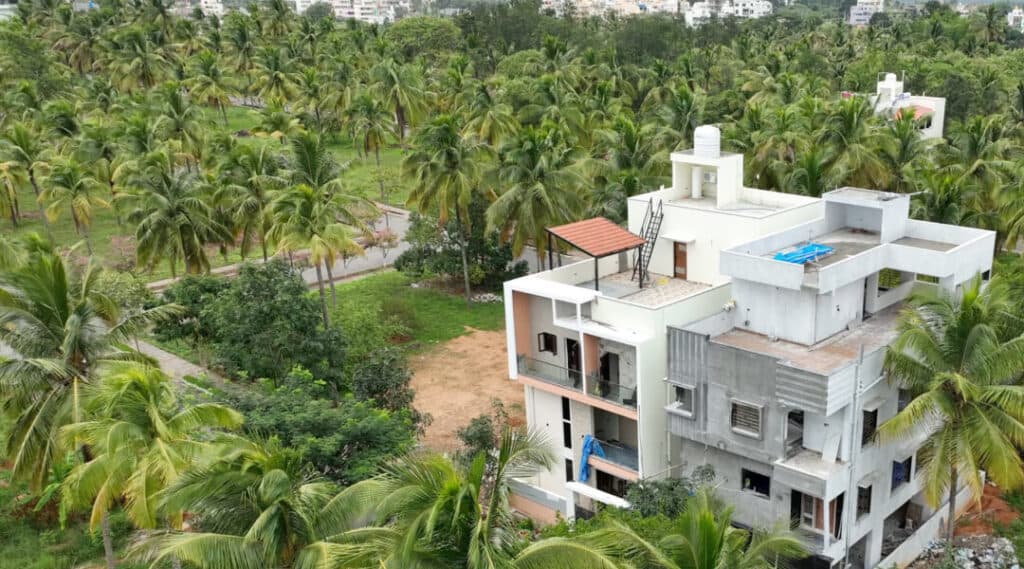
A newly planted row of trees can make a development look green at launch. But a more meaningful assessment starts with the landscape already present and how the site was planned around it.
Existing trees and greenery can be retained where site conditions and planning requirements allow. Where appropriate, we can also consider transplantation. New avenue planting and landscaped areas can then complement what is already there rather than treating every site as a blank canvas.
At Chartered Housing, we try to consider this from the planning stage: understanding the existing site and retaining what can reasonably be retained, rather than treating landscaping as something that begins only after construction.
The Brochure and the Ground Should Tell the Same Story

Once you have looked at the documents and the layout, the next step is simple: visit the site.
If a brochure describes wide internal roads, landscaped areas or multiple amenities, check what has actually been completed. Compare open spaces with the approved layout and ask which facilities are operational, under construction or proposed.
This is particularly useful if you are comparing plotted development projects near Nelamangala Road. Two projects can use similar marketing language while differing considerably in their stage of development and what has actually been built.
Time Is Another Test of Quality
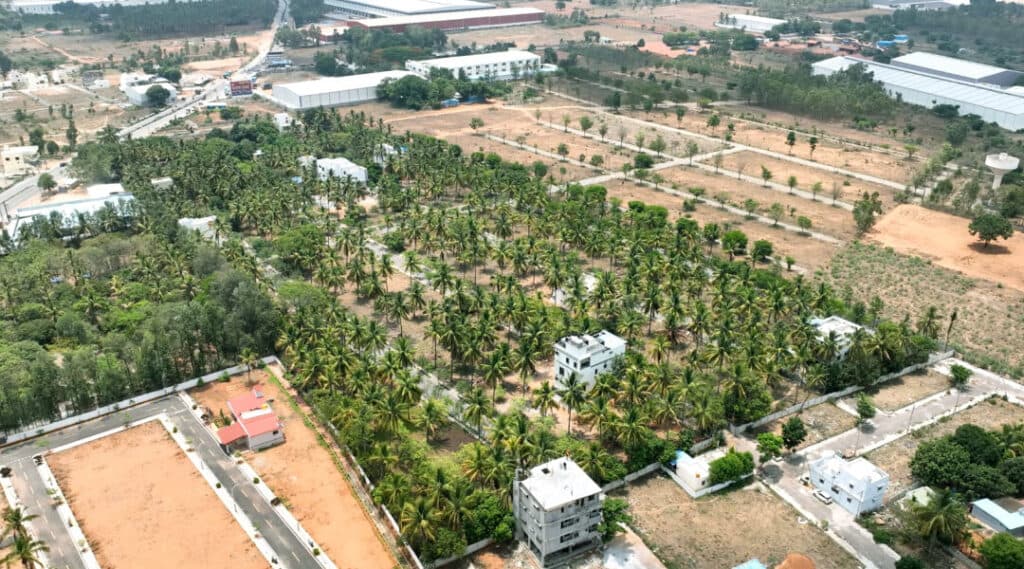
A new development can show you what has been built. An established community can show you how those decisions have held up.
Look at how the roads, drainage, landscaping, trees and common spaces have performed after years of use. An older project is not automatically better, but time gives buyers another set of evidence to examine.
So if you are comparing gated community plots for construction near Nelamangala Road, Bangalore, an established development can offer useful context: you can see what planning decisions look like after construction and occupation, not just at launch.
Practical Checklist Before You Buy
The evaluation does not need to be complicated. Before buying a plot, work through these checks:
1. Verify the RERA registration
Review the project’s registration details and the information available on the relevant RERA authority’s website.
2. Examine the sanctioned layout
Understand the relationship between your plot, internal roads, open spaces and common areas.
3. Check the infrastructure
Ask what has been completed, what is under development and what is proposed. Look at roads, drainage, water, electrical and sewage provisions where applicable.
4. Compare the documents with the site
If something shown in the approved plans or project information is not visible on the ground, ask for clarification.
5. Visit the development
Look at the actual condition of the roads, landscaping, open spaces and common areas.
6. Ask about maintenance
Understand who will maintain common infrastructure and landscaped spaces and how that responsibility changes after handover.
What ‘Premium’ Should Mean to a Plot Buyer

Ultimately, ‘premium’ in a plotted development is less about what you can see in a brochure and more about what you can experience.
The documents tell you what has been registered and declared. The sanctioned layout shows you how the land has been organised. The infrastructure tells you how the development has been planned and built. A site visit lets you compare those plans with what exists on the ground.
This is also how we approach plotted development at Chartered Housing: by looking at the land, layout and infrastructure together, with how the community will function over time in mind.
Chartered Gulmohar offers a current example. The project is RERA-registered (PRM/KA/RERA/1250/307/PR/110226/008465) and NPA-approved, with planned infrastructure including internal roads, pedestrian footpaths, underground stormwater and sewerage systems, underground water pipelines, electrical provisions, street lighting and landscaped green areas.
If you are considering gated community plots for construction near Nelamangala Road, Bangalore, it is worth checking these details in person rather than on paper alone. Chartered Gulmohar is open to visitors who want to walk through the layout and see it for themselves.
Note
[1] https://www.indiacode.nic.in/indiacode/bitstream/123456789/2158/1/A201616.pdfFrequently Asked Questions
RERA registration gives buyers access to information submitted for the registered project and establishes a regulatory framework around its development and sale. For plotted projects, buyers should also examine sanctioned plans, layout plans and approved specifications. Registration itself should not be treated as a certification of design or construction quality.
Look at the things that affect how the community takes shape: internal roads, drainage, water and electrical provisions, open spaces, landscaping and access. Compare what you see with the approved or disclosed project information, and ask which facilities are complete and which are still proposed.
Start with the project’s RERA registration details and sanctioned layout. Review the information available about the development, including the layout, proposed infrastructure, project schedule and other applicable disclosures. You should also independently verify title and approvals with qualified legal or property professionals before purchasing.
No. Amenities are only one part of a development. Layout, infrastructure, documentation, execution, open spaces, and long-term maintenance can all matter. A project with a shorter amenities list can still be thoughtfully planned, while a long amenities list does not by itself establish quality.